More than 7,000 ways to define Filipino
By Philip Dominguez Mercurio
After my article, “A ‘proud, fake’ Filipino’s open letter to Arnold Clavio,” came out, I received a ton of feedback via email and Twitter – some in support and some in defense of his comments.
What really struck me was that everyone came with their own definition of what a Filipino meant to them – whether it was based on ancestry/blood, birthplace, duration in the Philippines, knowledge of the language, appreciation of the culture or some combination of the above. Many were adamant about being either too inclusive or too exclusive; the result was a standoff between local and foreign Filipinos that was nowhere near getting resolved.
So I thought maybe this was approached all wrong. Maybe the debate shouldn’t have been about What but revolved around Why. Why does it even matter? Why is it necessary to define the term “Filipino” so rigorously in the first place?
Take the case of Tim Tebow as presented by The FilAm writer A. Mabini. In it, Mr. Mabini suggests that Tebow may qualify as an American Filipino based on his birthplace and love for his birth country which he mentions numerous times in his press conferences. But by the definition of others, Tebow would fail on many levels. As I see it, why does it matter?
How does he threaten the ideal Filipino that it is necessary to exclude him? What harm would be done?
Some Filipino foreigners have immediately suggested a theory related to certain crustacean for this attitude of exclusion but I will refrain from going there. Attitudes against foreign brethren aren’t without precedent. Going back to the 19th century, the Japanese who left Japan were considered castoffs, seen as tainted and were not allowed to return home due to the Sakoku policy of isolationism.
During the fall of Sukarno, Indonesians of Chinese ancestry who were forced to leave Indonesia and repatriate themselves to China were also never accepted as “true” Chinese back in China. Many were forced to toil the desolate interior of the country as second-class citizens and were labeled as “foreign devils” and “half-breeds.” Could current attitudes be inklings of these former ways of thinking? Perhaps…
I only ask because there remains many — and I mean many — Filipinos in America who continue to naively believe they are “real” Filipinos, some driving around with Philippine stickers on their cars, when in fact, many wouldn’t even be considered “real” at all. Just imagine the Matrix Moment when someone, say a Filipino Morpheus, tells them the truth by pulling them over and handing them that red pill.
Knock, knock! A short man in dark trench coat waited along a busy stretch of I-880 as the driver rolled down his window. Then the short man spoke:
“Excuse me sir,” Filipino Morpheus said. “I noticed you have questionable stickers and tags.”
“Huh?” the driver, Neo, said a bit perplexed. “No. I just renewed my registration at the DMW on the…”
“No, No. I’m referring to the sticker with eight rays of the sun and another sticker of what seems to be a map of the Philippines tagged to your rear window.”
Neo looked back. “Oh those?” He turned back then smiled proudly. “Why, it’s ‘cause I’m a Filipino, sir.”
“Filipino?” Morpheus hesitated then stared at Neo through his darken shades. Then he sternly replied, “Proof of Filipino-ness please?”
“Proof of what? Filipino-ness? Well look at me,” Neo said. “Aren’t I…”
“Were you born here?” Morpheus said cutting him off.
“Yes.”
“And you were raised here?”
“Yes.”
“Yea, sorry sir. No exposure to the Philippines.”
“Wait a minute, just wait,” Neo said, hoping to explain himself. “My parents were from the provinces of…”
“Irrelevant, sir. You were never exposed to the culture of which you speak of.”
“But I could understand a little Ilocano and Panga…”
“Again irrelevant, sir. Knowing one or two of the languages from afar doesn’t replace the fact you haven’t had the camaraderie with fellow Filipinos back in the Philippines.”
“But I watched Wowowee many times with my lola before,” Neo pleaded.
“Wowowee?” Morpheus smirked. “What? The variety show with all those ‘fake’ Filipinos holding signs that read, “Carson, CA” or “Jersey City, NJ”? That was just a ploy specifically designed to skew the minds of Filipino foreigners into believing they were accepted as one of the locals. If only they knew.”
“But… but.” Neo was at a loss for words.
“But what?” Morpheus said a bit irritated as he watched Neo’s head slump helplessly onto the steering wheel. “I’m sorry sir. You have no proof of Filipino-ness. You have two weeks from today to remove your stickers.”
Morpheus then turned and proceeded to walk away.
“But why?” muttered the downtrodden Neo.
Morpheus stopped upon hearing Neo and returned to the driver’s window.
“I know how you feel,” Morpheus said. “But unfortunately, being a Filipino is like having a credit score. It’s always searched for and it shadows you for the rest of your life. As of now Neo, your Filipino credit score is based on certain qualifying factors and unfortunately, having not long enough of a history in the Philippines is a major setback on your Filipino ‘worthiness.’”
“But I eat ‘sinigang’ twice a week,” Neo mumbled.
Morpheus grinned. “As I said before, Neo, you could stuff yourself with tamarind packs all you want, but minor improvements like that would do little to improve your score and as such some Filipinos will continue to decline you as one of their own.”
“But Morpheus,” Neo said. “Why do we even need a system like this?”
Morpheus stopped and turned. “Why? Even I don’t know why Neo? Perhaps you’ll need to ask a ‘real’ Filipino that one.”
See this article,"More than 7,000 ways to define Filipino," in The FilAM. Click here.
A ‘proud, fake’ Filipino’s open letter to Arnold Clavio
By Philip Dominguez Mercurio
Dear Arnold Clavio,
A dear colleague of mine recently made me aware of comments you made about Filipino players on the Philippine National Football Team playing at the AFC Challenge Cup in Kathmandu, Nepal. You claimed those on the team are not Filipino due to the fact some have not lived in the Philippines.
Though I will not debate you on whether or not these players are qualified to play for the Philippine National Team based on citizenship, I was quite curious by your comments concerning Filipinos. You say (paraphrasing of course) that if Filipinos by blood have not grown up in the Philippines, they are not Filipino “culturally” since it’s neither in their “heart” or “head.” Basically, you are calling them fake Filipinos.
Well, on behalf of all these lost “Filipino” souls unable to experience the Philippines themselves, I would like to personally apologize to you, Mr. Clavio, for insulting your culture and insinuating they had any relation to it. It seems because of their absence, they were unable to savor the morsels of ‘kwek-kwek’ in the morning from a pot of questionable frying oil, get hustled, smashed, squeezed into a steel box of transportation you call a jeepney, to jump from rock to rock on a makeshift walkway to get over a river of rapids that you once called a street, to get snubbed by a cab driver after telling them you wanted the meter on or to be attacked by a flying cockroach at 3 a.m. in front of a triage of dying tuberculosis patients.
I have experienced all of this, Mr. Clavio. I spent four years going to medical school at MCU (Manila Central University). Perhaps you have seen it while using the Yellow LRT line extension and for some odd reason, believe it or not, I actually enjoyed it. But of course, since I was not born in the Philippines and only retained my citizenship dually in 2007, I was unfortunately born into a culture much different than yours and therefore I am not qualified to be Filipino.
Being born in the Bay Area placed many setbacks on me being what you would call a “true” Filipino. As a small boy, my parents always shopped at SM Daly City (aka. SerraMonte SC) where I saw all these short flat-nosed people and we would buy food from this place called Goldilocks where they sold ‘lumpia,’ ‘pancit,’ ‘lechon,’ ‘nilaga’ and ‘kare-kare,’ my favorite.
I know, Mr. Clavio. Such a strange culture we have here in America where a white girl with yellow locks can be seen selling chocolate meat (‘dinuguan’) in Styrofoam. Then I go to my relatives’ homes and see them cooking ‘pinakbet,’ ‘kilawin’ and ‘pinapaitan’ while calling out to please open the windows for the sake of the clothes! I know that this is all so foreign to you. But breathe, just breathe!
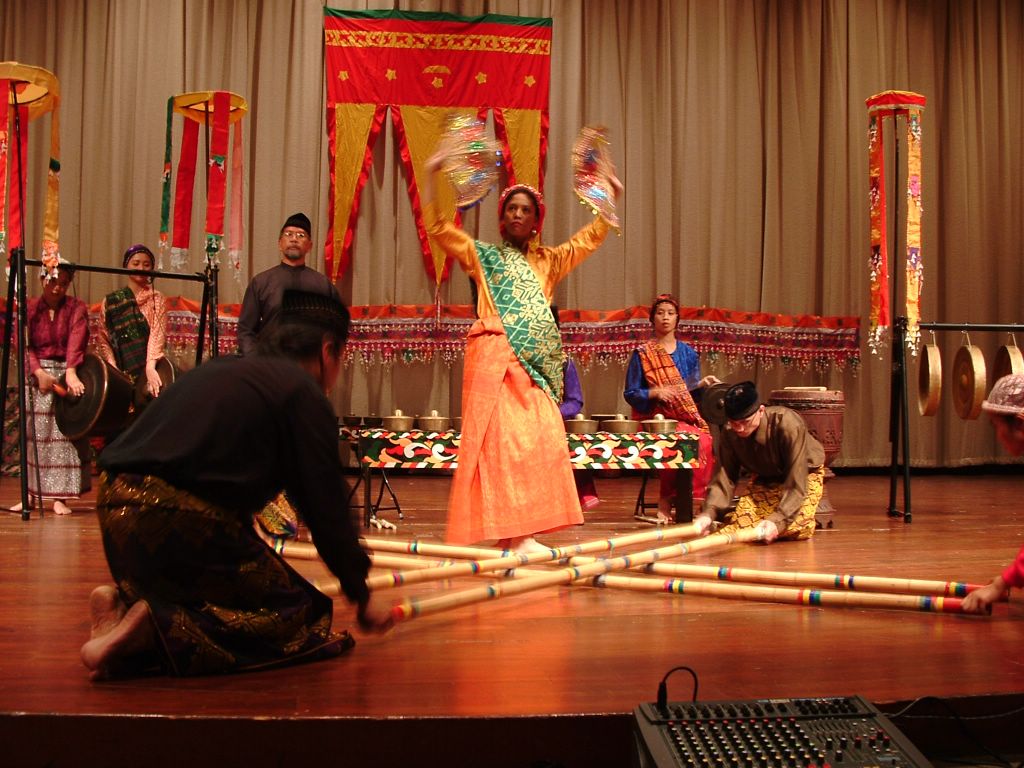
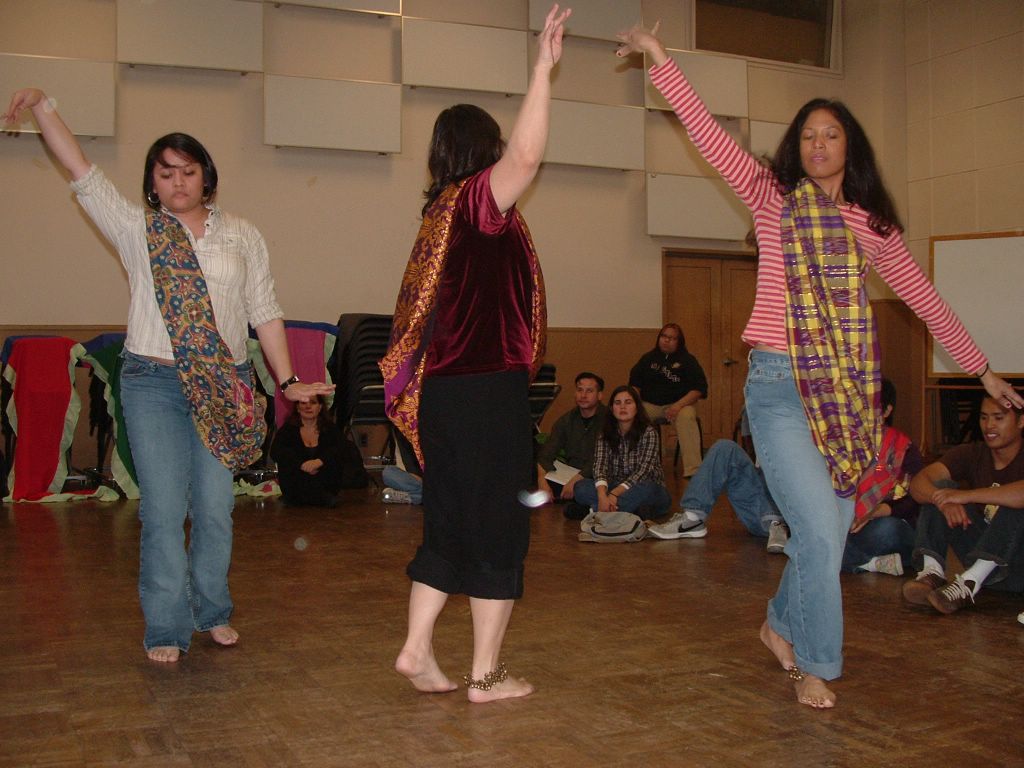
Some of the kids I grew up with learned this strange dance called ‘tinikling,’ where you jump through slapping bamboo sticks. Here in America, we have masters teaching a strange martial art called ‘kali/eskrima ‘and a strange musical art known as ‘kulintang’?
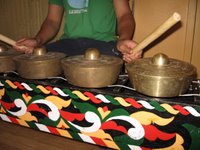
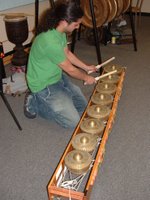
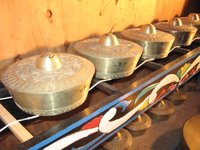
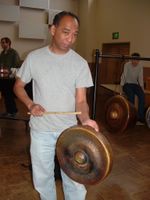
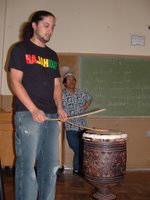
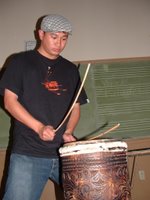
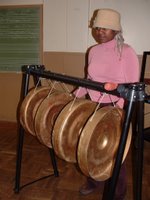
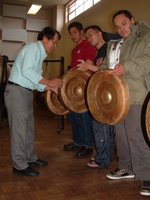
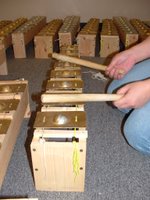
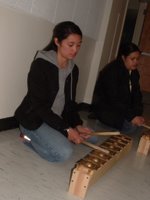
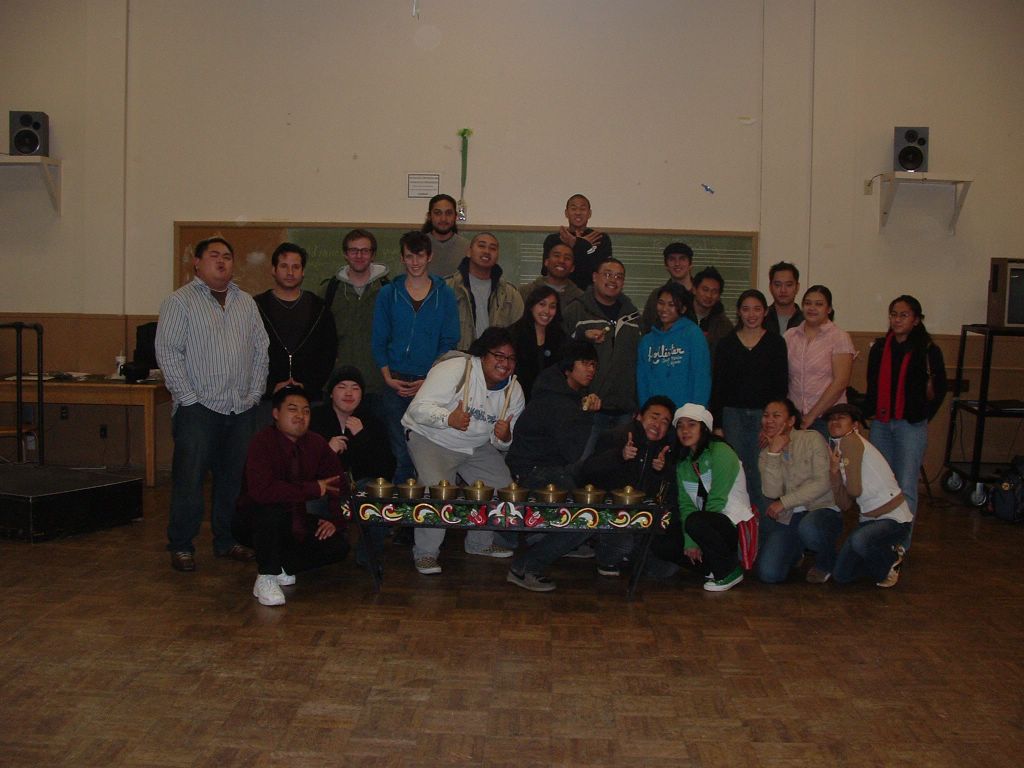
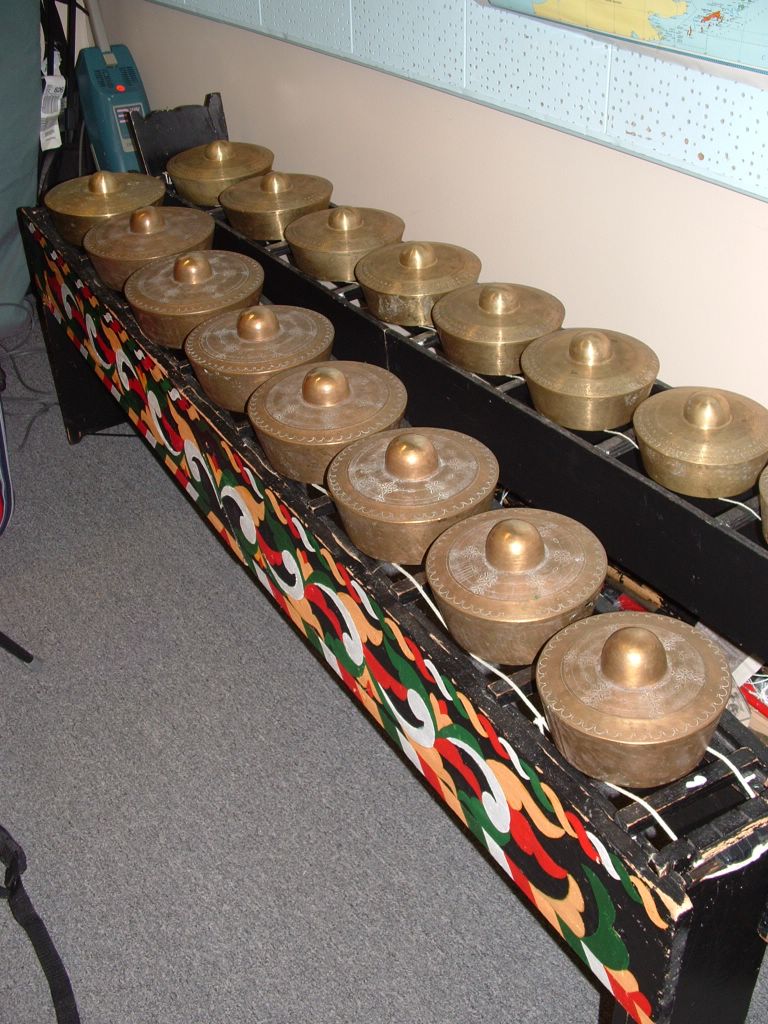
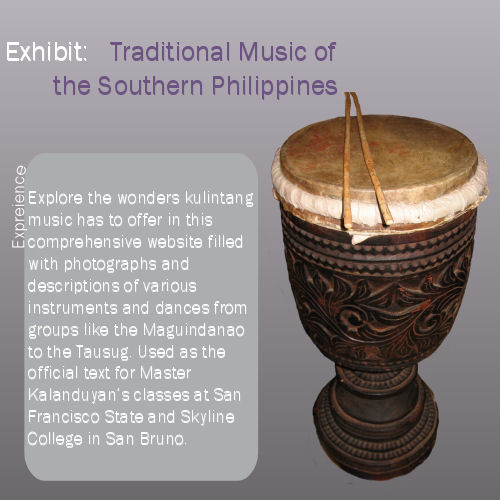
‘Kulintang,’ Mr. Clavio? Do you even know what that is? It’s a musical instrument made up of eight gongs; it’s from an island called Mindanao. I apologize immensely because not only can I play it, I’m writing the first book about ‘kulintang’ music. I know, I mean, what culture have I dived into, right?
I apologize immensely, Mr. Clavio, for being one of these “fake” Filipinos. My forefathers come from a strip of a desert called Ilocos, a hard environment whose people are strangely clannish, unabashedly frugal and supposedly hardworking people. Because of this harsh environment, many left in droves becoming what was called the Manong Generation, the first Filipinos to come to America to pick the pineapples in Hawaii and lettuce in California in the 1930s.
They generally struggled alone with no family until Family Reunification in 1965 allowed them to petition their families — entire barrios even — to the United States. Now with the arrival of medical professions, mainly nurses from the other provinces of the Philippines, the number of these “fake” Filipinos now reaches 4 million (more than the entire province of Pangasinan at 3 million.)
It is no wonder many of these millions would try to connect with those in the Philippines through programming like TFC and GMA Pinoy TV and by sending enormous balikbayan boxes. Have you ever received a balikbayan box, Mr. Clavio? It’s filled with something totally foreign, called corned beef and SPAM! Yuck!
Alas, that doesn’t mean much to you, since obviously none of those who struggled before me and those like me is truly Filipino since this all happened 7,700 miles away from islands which you call home.
Since I am obviously just a “fake” Filipino being born in San Francisco, California and NOT San Francisco Del Monte, Quezon City, I guess you would like to experience how to live as one.
Fine. Get your a** over to your local Victory bus station (there is one near Araneta and another in Caloocan in the Victory Mall complex) and buy a ticket towards a place called Baguio. Before you reach Baguio though, wake the heck up and get off in a province called Pangasinan. There, I will personally greet you with a pot of boiling water and say, “Welcome to the United States. Would you like ‘ampalaya’ leaves or ‘saluyot’ in your ‘dinengdeng’”?
See this article,"A ‘proud, fake’ Filipino’s open letter to Arnold Clavio," in The FilAM. Click here.
The Art of Trickling
By Philip Dominguez Mercurio
Peeing. Don’t be ashamed to admit it. For ages, this unique art form has been passed on from generation to generation. Its golden arches of high-octane rich urea, springing fruitfully from between the loins of countless millions like the geysers found in Yellowstone, eliciting the minds of hundreds of dreamers seeking that elusive feeling of total emancipation only felt thru the arduous release of bodily fluids.
Though many of you are familiar with the poignant background sounds of rushing water accompanying your release of contents, technically, the idea of squandering your unique yellowness onto some dejected puddle of water is still a relatively new phenomenon only commonly found in advanced states of toiletrism, like the United States.
Now, let’s say you took out your DeLorean and time warp yourself back to the Philippines in the 50s. After enough time has passed, you might have the urge to pee and you’ll naturally scurry for the nearest toilet but what you may find yourself aiming your yellow rainbow of goodness at is nothing but bare ground.
Well, what happen to the toilet?
Well, unfortunately for you, you didn’t end up in the Philippines. But as my daddy recollected to me on his trips with my grandma to Pampanga, the Philippines found along the roads leading towards the provinces roads notoriously known for their habit of turning their travelers legally blonde.
Apparently, unlike those cheesy rest stops along Interstate 5 where you pretend to buy the whooper with cheese but instead hastily sneak into the lavatory unnoticed, in the Philippines, the idea of sneaking into your roadside Burger King for a little trickle was unheard of. This is because, not only was plumbing nonexistent in such places but there also wasn’t any Burger Kings along the way to Pampanga.
But don’t let the nonexistence of Burger Kings fool you. Filipinos even then still had rest stops. Just without the toilet bowls.
If you don’t know, apparently old women in really long skirts were known to halt the bus completely in its tracks, get off in a timely manner, pick a nice spot of tick-infested grass adjacent to the bus, spread their legs to the wind and well… just go, instantly fertilizing the landscape beneath them, giving new meaning to the term “organically grown.”
Whenever I hear stories about the Philippines like this, I’ve always thought that would be a strange thing to experience, the sight of a number of old women all of a sudden peeing next to a bus, the idea of which could tickle and frightened the imagination all at the same time. Wouldn’t it be funny to have had that same experience?
I guess. But always be careful what you wish for. It may come true.
“O good lord,” I thought.
I switched the headlights of the car off. Thank goodness for the creation of darkness, or this would have been too blinding to see.
Me, my Grandma Uding, and my Auntie Rosing were waiting patiently in the car for my Uncle Milo to arrive from our trip from the farmlands of Stockton.
Apparently, the combination of my speediness over the ranges of Livermore and my uncle’s more conservative speed at the limit, created a space-time continuum long enough for boredom to set in. In accordance with the laws of physics, after a certain amount of time, such as a 70-minute trip from the heart of the San Joaquin Valley, there is so much a senior could do to hold off the urge to pee.
With the choice of actually holding it, applying those laws led one to a simple solution. Go pee now.
And that’s exactly what my grandma did, peeing away in full view of the emblem of my car, sending the liquid mess flowing beneath the hum of my car engine.
I guess she didn’t realize that peeing in front a vehicle with its headlights blaring at dusk, would definitely expose some inappropriate goods to any innocent travelers driving by. Whatever the case, I definitely wasn’t going to touch my tires for a while.
My auntie couldn’t wait any longer either, sneaking around to the front of the house where it was dimmer to do the same deed. Come to think of it, no wonder why the grass is so green in the front yard of my Uncle Milo’s house. They used a specially formulated fertilizer filled with all the required nutrients coming straight from the Philippines.
To tell you the truth, the whole of my family seems to have a fascination with the urinal side of things. My mommy loves peeing anywhere that’s feasible.
Even when there are clean, well-maintained bathrooms available for the sitting, like in rest stops scattered along Virginia Highways, the thought of actually having to walk there is quite intimidating; intimidating enough that she’ll rather resort to simply squatting next to the car and taking a leak, even with the presence of numerous big rigs lined up nearby.
I guess, the idea of someone catching them in their very private act, makes the peeing an even more exciting escapade than it already is. And if opening the door of the car and lifting her worn buttocks from the grips of the car seat risked too much physical effort, she was more than likely to take out from underneath one of the front seats her handy ‘pee-pee’ bowl, that she usually ‘borrows’ from her work, and do this deed indoors.
Apparently, nothing beats the thrill of peeing while lodged inside a car going at 60 mph while large SUVs zoom by.
As unhygienic as you may think they are, their sensible, go-with-the-flow behavior does bring home one positive feature with it.
In their ingenuity to find other means other than the neoclassic water bowl procedure Americans are used to, my relatives have not only been able to avoid the stresses that holding ‘it’ requires but also were able to manifest exactly what their foremothers have been practicing next to buses years before.
Now, kids who’ve never been able to venture to their homeland could, in very strange way, still experience how it feels to be in the Philippines by way of the habits many of their relatives continue to still practice.
So if ever you see any of your relatives marking their territory in a national park somewhere, just be happy and smile.
They’re not being unsanitary.
They’re just practicing their culture in unison. - PDM
Feelin’ the Manongs
By Philip Dominguez Mercurio
COOKEVILE, TN — The smell of freshly cut grass. The purr of a humming engine. The utter release of pollen and other known allergens into the placid air.
These are the sights and sound that accompany the tonic, which is lawn mowing. Mention this concept to anyone living beneath the clouds in Daly City and bewilderment ensues.
“Lawn mowing?... What the h**l is a lawn?”
Here, in a city of paved driveways and close-knit houses, the idea of cutting
grass is lost to most. Kids rarely consider it as a chore and most households rarely have the time or the patience to practice it. And I should know… I grew up here.
But my mommy doesn’t live in this D.C. She decided to pursue occupation closer to the other D.C., Washington D.C. Just drive west and south for a few hours and you’ll find us.
This is the South, an area where lawns happen to be much more commonplace.
Here, land is easier to come by and rain is much more frequent in occurrence.
Combine both factors and you easily get a recipe for really big, green, strong lawns.
And my mommy should know. Recently, she decided to buy a ranch, which in layman’s terms equals a house with a large front yard and a larger backyard.
In order to mow such a large yard, a new lawn mower should definitely be in order, and boy did we buy a beaut. Given such a machine with such voracious power and brute force, you’d think you be able to take on the world. Or at lest your yard.
That’s what I had thought anyways… when about to take on my mommy’s front yard. I presumed that there’s no way a bunch of tiny, thin grass stalks, even with their numbers, would be able to stop a steel blade toiling at who knows how many rpm.
There was just no way. Of course, this was ignorance from the sweet city of Daly City talking. Like I knew what I’m talking about.
From the get go, a sense of invincibility filled the air. With a crank of the stringy thingy, a black cloud of exhaust emerged from within its bowels, and after ten seconds, the rumblings of a grass-killing machine were finally attained.
Just by holding the shaky handle, the incredible power of the rotating blade could be felt, producing shivers within communities of grass stalks that lay nearby.
I sent the machine on its way, like a pirate on a mission, hacking everything and anything in my way. Grinding through root stubs and the like, nothing seemed to be able to stop the inevitable melee that was about to occur.
The resultant carnage of shivered up grass and weeds thrown to the side, could have made for another environmentalist’s worst nightmare. But I wasn’t an environmentalist. I could have cared less.
For the time being, that sense of invincibility beckoned me to believe I was on top of the world. But that was short lived.
Entering a jungle of grass at knee-high length, the engine started choking.
Invincibility waning? O, I hoped not.
The coughing continued; the lawn mower acting as if struck by some grassy form of pneumonia. It was now spitting out grassy lumps; its days of unyieldingly hacking up grass into fine pieces now behind it.
It seems that trying to chop a highly dense amount grass was jamming the outlet where cut grass was supposed to spew out. O well, I thought.
Then it happened. In a somewhat momentous but expected climax, the engine finally cut out, dying helpless in sea of grass.
The power of steel was finally put to shame; the lawn mower’s blade, once a force to be reckoned with, now became just a lowly piece of hardware brought down by a torrent of steadfast grass stubs.
I felt like I was suddenly placed in a junkyard; expect in this junkyard there was only one piece of junk: a used to be new Troy-built mower.
The struggle with the lawn soon became nauseating. Piles of hay, once at the mercy of the twirling blade, now avenged themselves, accumulating around the lawn mower, becoming so daunting that its very thickness became an obstacle to the small tires that plied over it.
Not only was the tires effected by this gross amount of hay, but the blade as well. Hay sneaked themselves within corners and crevasses inside the machine, immobilizing the blade by jamming it with a harden mass of slush grass.
And the sun’s presence didn’t help ease the situation either. Its constant roasting effect added with an influx of moisture, created an atmosphere of sticky humidity that seemed to arouse an army of mosquitoes that swirled around in a dizzying performance that could either make one crazy or one’s arms bloated, all at the same time.
By the time two hours had passed, only a tenth of front yard had been cut. I rested my arms on the lawn mower’s handle and realized then that this was going to be a very long day.
Now, I could complain and whine all I want. I mean, spending all day pivoting a lawn mower so it could breathe just to realize that within four days, that same grass would have overgrown itself, seemed futile at best.
But if any good came out of this, other than a nice well-maintained lawn, perhaps it was the fact that this experience made me think about the Manongs of the San Joaquin Valley.
Unlike me, this was something which they faced everyday. There was no turning back to get a Pepsi or go to an air conditioner like I did to rest for 30 minutes to regain strength. Through hours of backbreaking work, tirelessly fighting both exhaustion and the excruciating heat, they toiled onward, unfazed by the situation which seemed more hellish than good.
And it may never mean anything to someone reading a sentence of it or two in a history book, but obviously this was an experience impossible to fathom by just reading.
Words would never beat the real experience of actually trying it out, working in the fields, feeling pure exhaustion take over. Just the fact that they were able to endure through it all, made them special in their own rite.
And, as beads of sweat flowed from my forehead, all I’m left to say about their very experience could be summarized into two words.
Simply amazing. – PDM
Accented
By Philip Dominguez Mercurio
AN IDLE computer. Two months later, it remains in its stagnant state,
disappointed to find its mouse never yet being used to click on icons, its keyboard never yet being able to hear the riddle of fingertips along its keys and its plush screen never yet having contact with pupils for a sustainable period of time.
Technically, you’d think that if somebody was given such a computer, one that was brand new and highly advanced, filled with all the features one could ask for, that person would instantly be on it, using it to all its capabilities to further their work ethic.
Yeah, but this happens to be my mommy. There’s always an exception to those fundamental rules.
For someone who’s used to typing using only her pointer finger, the expectation that her company had that she’d being able to input progress notes directly into the network in a timely manner, was pure lunacy.
But the company tried to be inventive, trying a voice–recognition system that would make it possible for her to do dictations directly into the computer, without the need to type at all. The idea seems flawless except for the fact that her company forgot to account for one tiny factor that could make or break this wonderfully made marriage of Filipino and computer.
“Peer-pressure. Peer-pressure,” my mommy recited into the microphone.
The electronic message on the screen disagreed though, differing by just a tad:
Beer-pressure. Beer-Pressure.
“PeeRRRRRR,” my mommy said, this time with more clarity.
BeeRRRRRR, the computer insisted.
Well, what do you know? I guess that tiny factor wasn’t tiny after all.
Say hello to the Filipino accent, capable of causing one to incrementally curse out voice-recognition technology for its inability to distinguish the various combinations of consonants the Filipino tongue may throw at it.
For the Filipino, newly acquainted to the American shores, such an accent presented an obstacle that must be overcome, a hurdle into the society known as America, an apparent ‘original sin’ that those from back home were uniquely endowed with that must be cleansed though some form of ‘baptism’ of corrected pronunciation in order to be understood by the regular Joes of Americana.
Fear of the ‘accent’ rested solely on the belief that it was supposedly less advantageous for the one blessed with it, causing one to lose favor immediately when sent into an already fierce American job market where first impressions almost always made the difference.
So in fear was my mommy of its unpleasantness that she maintained a strict policy of never speaking to me in any Filipino tongue, whether Tagalog or Ilocano, to purge whatever effects her inflicted tongue would have on me, a consequence which has lead to the unfortunate disabling of my ability to speak Tagalog to this very day.
With so much hype over a mere difference between a few consonant pronunciations, it does make me wonder whether or not Filipinos have forgotten that their accent isn’t the only one out there. Widen your perspective, you’ll find that the ‘Filipino’ accent is apparently just another accent in a spectrum of accents, from Jamaican to Japanese, each of them filled with their own unique expressions, their own styles and mannerisms, even their own faults.
But even with this much diversity, the sad part about all of this is that Filipinos continue to look down upon their own accent negatively while all those other accents are slowly being accepted by the American culture in which they come in contact with.
The British accent has been embraced by Americans with reverence and homage, while the Aussie way of talking seems to have become a fancy way to spark interest in a bunch of crocodiles with bad tempers. Even the Indian accent, although in a more stereotypical fashion, has gotten some limelight in the American media forever locked in the archives of the Simpsons or found in cabbies on games like Grand Theft Auto III.
As much as all the negative publicity, Filipinos continually surround their own infamous accent with, chastising it as one of the most decrepit of them all.
Let me tell you from experience that I’ve heard much worst. If you’d only take a trip to the city known for its chessesteaks and hoagies, Philadelphia, you’ll find an accent that may make you want to carry earplugs handy.
I had a Puerto Rican classmate who had the hots supposedly for one of the girls in a region of Philadelphia known as South Philly. As great as she looked and as everything, she had that really prominent Philadelphian/Italian mice-like accent that once she spoke up, let’s just say my classmate wanted to do something that would pipe her down for the English she produced was unbearable.
In reality though, it really doesn’t matter whose accent is supposedly better or worst.
For the British person, who moved to America for some reason or another, the last thing their intent on doing is rubbing out their accent, replacing with the more placid American one.
For them, their accent is what makes him or her British in nature, just as British the Union Jack is or the Beatles are.
And Filipinos should do the same. I’m not saying you can’t correct your pronunciation when need be but you also must realize that ‘unique’ accent of yours is part of your culture, one of the things that makes you Filipino, just like your flat nose or your appetite for vinegar.
If you could make that connection, then perhaps finally the Filipino accent can also be accepted just like any other accent that must be dealt with as opposed to being one that must be hidden away and annihilated for hearing’s sake.
I know. So, some of you sound like Tony the Tiger when saying ‘girl,’ and maybe your kids like playing tricks on you by asking you to say words like “hippopotamus” or “beach,” knowing full well you’ll never get it right but when it comes down to it…
It’s your accent. It’s nothing to be ashamed of. Just be proud of it.
You’ll TANK me later. – PDM
Expedition into Filipino 101
By Philip Dominguez Mercurio
Now, I’ve gone to SF State for three semesters now but (surprisingly) I haven’t really divulged myself into the Filipino scene yet.
I mean, the Asian American History class I took had a good rise on the make-up of the Filipino-American community and how we came about, but that was basically a history lesson. Nothing really self-involving there.
So, here I went, adding a class with Daniel P. Gonzales at the helm. Our first assignment basically was, as he said himself, “Look up origin explanations (of Filipinos)… historical or mythical.”
I thought to myself, ‘What… historical or mythical?’
I mean, I’ve never heard anything from my parents or grandparents, telling me
of the mythical stories from back home that related to our ‘origin’. The mythical was usually biblically-enhanced, consisting of Adam and Eve getting created by the Almighty and after their glorious big bang, little brown people washed ashore in Manila Bay from some ark, two by two, and tada… the society known as Filipino was born.
Basically, you created your own ‘history’; let your imagination run wild, because obviously, there was no mention of Filipinos in the Bible.
Of course, there does exist to my surprise ‘our’ very own mythical stories. But, at least from my perspective, nobody explained anything to me, either because no one in my family cares about them or they were only spoken about on a need to know basis. And, apparently since I didn’t need to know, I just never knew. So, I have an excuse.
So, researching I went and no… I didn’t do the new trick, which is to simply go googling like many have. Instead, I went for the classic way of researching… wet-thumbing my way through pages of dusty information in a library somewhere.
Unfortunately though, the Filipino history section at my school happens to be hella small.
It consisted of only six rows of books, or technically less than a bookcase full. In comparison, Vietnam, a country with roughly the same number of people as us, has four bookcases full of historical information, many of them much more recent looking as well.
Of course, much of their book collection seems on the more graphic end with titles mostly attuned to the hum of “Home to War” to “The Killing Zone.” But I don’t care about that… no matter what, the bottom line is, they still got more books!
As I dusted though book after book, I realized that looking for the mythical part of our history was tough to find, especially since most of the collection divulges more into the historical context of our origins.
According to Wernstedt in The Philippine Island World, basically the first Filipinos were wanderers of some sort; kinda like the people you met who first get off the plane at SFO and are confused as to where to go next.
Who knows what made them settle in this lowland? Perhaps it was fate or maybe it was the smell of a pig struck by lightening that drove them here by the droves and in doing so, created the first Filipino barbeque. You never know. We could only speculate.
The first wanderers, according to Keesing in The Philippines, were a group called the ‘Austroliods.’ This race, noted to have the same racial strain as “the white peoples of Europe”, simply passed through; not very interested in the tocino and longanisa to follow. They missed out… terribly.
Next came the Negritos, noted in text as “dark-skinned frizzy-haired pygmies.” According to Alip’s text, Political and Cultural History of the Philippines, these little people were the first wanderers to have actually settled down, hunting and fishing as they went.
Wendsredt states that much of them, after crossing the lowland of Sundarland, were subsequently pushed into mountainous places thanks to later immigration.
The last of the wanderers, were the proto-Malays, who like the Negritos, were also ancestors of the Aetes, according to Agoncillo in the History of the Filipino People.
Keesing suggest these folks with straighter hair and having a more Mongoloid affinity were also hella short as well. He suggests that the only importance of these groups is that thanks to the mixing of blood, much of the Filipino race is short.
Great observation! Of course, it’s not like I couldn’t have realized that myself every now and then.
Alas, the ice age ended sending the Philippines into the archipelago state we all know and love. Proto-type kayaks soon raced for the newly formed islands for they were the new means to this water-bound land.
Indonesians were the first to immigrate here nearly 5,000 years ago, and according to Alip, came to the Philippines in two waves that were labeled just like blood type: A and B.
Type A were a tall, slender, well-built people, lighter in skin, who according to Keesing, were farmers, fisherman and ‘great’ warriors. So great was this group, that these ‘warriors’ set off to further lands and are now known as the Polynesians. Perhaps an image of the ‘Rock’ could be used as reference.
Type B, on the other hand, were physically opposite of their predecessors. As stated by Agoncillo, they were stocky, darker and blessed with a pair of thick lips and their infusion into the society has lead to the descendants of those who built the first rice terraces in the Philippines, which in turn has lead to Filipino’s never-ending addiction to rice.
The Malays or Malayans followed in their tracks, cruising in with their fancy sailboats from the seas of Celebes. As described by Agoncillo, the first migration had people who were influenced by the Indian culture which proliferated present-day Malaysia and surrounding territories at the time.
The second migration lasted for more than a millennium, starting in the 1st Century, as mentioned by Alip and their migration ultimately has lead up to the formation of the present-day ‘Christian’ Filipinos, like the Tagalog, Visayan, Bicolano, Pampango, Ilocano etc.
The last and final migration before the era of Spanish Colonization was the Mohammedan Filipino or Moros, who laid the foundations of Islam in Mindanao and Sulu which has lasted to this day.
It’s interesting to note, that while reading such history books, there seems to be an unwavering bias toward those people depicted with more European-like characteristics.
Case in point: When describing the two types of ‘Indonesians’, Agoncillo refers to type A as having a “sharp, thin face,” while type B were “stocky… with thick lips and large noses.”
Alip goes further, referring to the type A as having “aquiline noses, not paralleled among Mongoloid” and type B with a “thick, large nose.” As you can see, as with anything Filipino, apparently it’s all about the nose.
But minding the nose, notice how the depiction of the type A, who are “very tall, with European-like features” is given more ‘positive’ connotation to those more ‘inferior’ type B. This same bias seems to apply to depictions of the Negritos and Aetas as well.
Is this a case of subtle racism of the part of historians or just an instance of a horrible misunderstanding? You decide.
Anyways, that rounds off the historical look at our origin. And what about the mythological part?
Well… you’ll just have to wait and see. -PDM
Those Silly Photographs
By Philip Dominguez Mercurio
SAN FRANCISCO - Going through an old picture album is fun. Many times, I can’t help but laugh when finding pictures of my mommy and her brothers lined up together in front of some fountain somewhere in the city, all with jerry curls and sunglasses, making them look like an Asian version of the Jackson 5.
Then there are my cousins, all double-parked in front them in their strollers, usually crying, sad, complacent or completely clueless as to all the commotion about them.
In pictures where there are 40 or more people crammed into one 3 X 5, sometimes I’ll spend time trying to figure out where I am in a picture in a sort of “Where’s Waldo” but browner series, only to have my mommy come up to me and say “Oh, you weren’t born yet.” What a waste of a good 15 minutes, don’t you think?
I remember one time, while perusing through some abysmal stack of photographs, I came across one which seemed to stand out from the rest. There was my mommy relaxing on the bed with my cousin Vena and my Grandma Feliza in the background, sitting and enjoying their poses. They seemed so happy.
It’s then I started thinking... “Gee, I don’t recollect any relative of ours owning this house.”
Going through more of the stack, I realized that this was just one of a bunch of pictures from this unrecognizable house. The room, with its yellow and blue striped bed covers and wood furnishing, didn’t ring a bell in my little head.
But judging by their behavior though, one in which they were found opening and closing the blinds and showing off one of the teddy bears to the camera like Vanna White, you’d think that this house obviously belonged to somebody close to us or at least related to us. So, I couldn’t help but be a bit inquisitive...
“Mommy… whose house is this?”
She thought a little; her expression showing signs of confusion as well. But after a simple sigh, she figured it out.
“Oh, I know… that’s a model home,” she said with a guilty smile. “We were just
trying it out.”
“Trying it out?” I thought.
“You know... So we could send the pictures back home to the Philippines.”
Ah yes. The old gimmick returns. Go to model homes. Take a horrid amount of pictures. Develop them.
And soon, after a few days in air-mail, relatives in the provinces would think you have succeeded, considering the fact that your house is now lined with dry wall and your bedroom is all fancy-fancy.
Talk about the best deception ever thought of till the age of computer graphics came into full view. But, even in the twenty-first century, this type of balikbayan photography still works amazingly well, usually working its magic within both camps on either side of the ocean.
Now, realize that, this doesn’t just apply only to houses. Obviously, Filipinos knew all too well, there was more in America that could be exploited than just a bunch of pa class cushions on some bed.
“Wow. Look at your uncle’s truck,” my mommy said, pointing to one of the pictures. The truck, a Guamanian contraption capable of traversing the Himalayas without a hitch, was practically twice my uncle’s height and had tires to match.
My Uncle Joseph stood in front of it, his arms crossed in such a way as to suggest he owned the d**n thing. And if you didn’t clue in, the writing behind the photo (written by him, of course!) surely would have.
Of course, that wasn’t the only car in his collection. Flip though more Kodaks, and you’ll find this uncle of mine next to a blue car. Then a red one. Then a white one.
Was he a Superstar?
Nope. Not even close.
But of course, with all those ‘cars’ in his arsenal of photographs, you would have thought he was.
Now, you may believe this is just another example of a bunch of Filipinos doing their best to be as mayabang as possible with as many photos as can be humanly taken. And you could be right by presuming that.
But perhaps you’ll be surprised to find out that this picture-taking forma-forma isn’t just a recent phenomena created in response to the introduction of color photos.
According to the Filipino American Experience Research Project complied by Danilo T. Begonia and Daniel P. Gonzales, even before the War, Filipinos living in America, were already taking black-and-whites by the boatload, sending them back to the home country with the hope their fellow countrymen will see them thousands of miles away in all their glory.
Such pictures of foreign lands during the nineteen-twenties and thirties, where the sun was always shining and everyone seemed to have a shiny automobile, played a major factor in compelling hundreds if not thousands of the Filipinos to seek that ‘golden’ opportunity held within those little photographs.
Of course, such false advertising, shrouded much of the reality most Filipinos in America were really facing, which was much more on the dim side than the lighten situation the pictures that circulated from barrio to barrio seemed to portray.
And as such, many youthful Filipino adventurers were sucked into what they thought was their journey of a lifetime, only to find their dreams full of milk and lechon evaporate before their adventurous eyes once they reached the opposite shore.
Fast forward 80 years and apparently, we still find ourselves in a similar predicament. If one were to put a positive spin on all of this, one could easily say that such photographs are helping to encourage many back home to strive for more, knowing that they too can attain the fancy woodwork and the cuddly teddy bear if they just tried hard enough.
boomerang
But, just like a boomerang, the negative spin of this always comes back to slap you and admittedly, in this case, it comes down to a simple story of the supposed ‘haves’ trying to impress the ‘have-nots’; making those without green cards envious because they’re not here enjoying the ‘homes’ of California living as well.
I wonder if those positives outweigh the negatives in such a situation. I mean, is encouraging jealousy within others so they could better their lives, justifiable?
Could someone rationalize a vice and turn it into a virtuous thing? Look, I dunno. You tell me.
Perhaps, Begonia said it best when saying that it just “depends” on many factors, like whether or not it’s economically safe to come here or not.
What’s sensible during times of economic boom may not be so once a recession beings. It’s a tough question that may not ever have a clear cut, toothy-fruity answer attached to it. Not everything is perfect, I guess.
As I grabbed my keys to head out the door, my little cousin Sean Melvin sped by me from the open doorway. I was about to close it but soon realized that my aunties we’re all outside in the front yard. My curiosity soon begged me to ask them of their doings.
“What are you guys doing?” my question stated; a question which obviously wondered what all the fuss was about.
My Grandma went to the door and stood next to me and soon, we both watched as my Auntie Norma, Auntie Isabel and Auntie Wilma stood around my koche for another round of pictures.
“They’re taking pictures with your car,” my Grandma Uding said blatantly.
“Your Auntie Norma is going to send them back to London to show to everybody.”
Yea. This will never end. - PDM
Pass the Apron
Pass the Apron
By Philip Dominguez Mercurio
NASHVILLE, Tenn. – Another cold December night and I am with only pot and pan.
Or maybe just pot, this time around.
Into it, the cold tap waters from the dams of Tennessee were aptly applied, nearly rounding up to the pot’s very rim, as a coiled furnace gleaming hot red was added from below. Moments later, the dried noodles were thrown in; its soaked self sinking into the very waters that it bathe in.
Along with that, came the packaged seasoning, adding a dash of color and an aroma only those familiar with this operation would know only to well.
Alas, two eggs were suffice enough for the finishing touch; cracked and opened over the bubbling waters below. With frequent stirring, enough time would have elapsed and the words, Tapos na would be raved with outward glee.
My mommy came to the kitchen for a look see. Noting the simmering broth boil, her face had neither the hint of interest nor the look of hungry anticipation stemming from it. Rather, she hugged me and ended with a simple if not logical statement: “Let’s go to IHOP.”
Hmmm… I guess Top Ramen isn’t good enough these days.
In the void which spans between Christmas and New Year’s Eve, one is left with only one choice once the Christmas leftovers you brought home from that last party have been wasted: cooking yourself.
Of course, if that only recourse doesn’t work out, then one has to resort to other emergency choices like going to places like IHOP at eleven thirty in the evening for a late night rendezvous with a couple of pancakes and some aging syrup.
As we enter the 21st century, Asian kids with a knack for the oven have waned enough that folks like me have even felt its effects.
Take this fact into account for example: Almost all my girl friends either have no experience in the kitchen or even worst, refuse to ply into one.
When posed with the very question of cooking for oneself, one of them instinctively exclaimed, “I refuse to cook!”; her steadfast gaze resembling that of Lucy Liu making her refusal sound more like an ultimatum than anything else.
Another girl just giggled at the thought, as if the idea never crossed her mind. I even explained to another one who happens to be a chemistry major, that cooking is just like doing chemistry, in that it requires mixing of certain substances under similar contraptions like a Bunsen burner for a certain amount of minutes.
She didn’t buy the argument though; rather contented with being the one just washing the dishes instead. O well… chemistry majors can be so dull.
Now for my Chinese and Vietnamese friends, taking a step back from the furnace of life doesn’t necessary mean the end to their culturally enhanced eating habits. I mean for years, Chinese restaurants, from mere buffets to high-class dim sum shacks have abounded so much so that you could smell the MSG from miles away.
And every Vietnamese restaurant you come across from those on Clement to here in Nashville seems to be carbon copies of each other from the store names to the very menus they handily use.
Unfortunately, for Filipinos like me, globalization hasn’t resulted in the acquisition of Filipino restaurants at almost every corner in the continental United States.
You’d be lucky to stumble upon one and sometimes you may find a Thai or even Mongolian bistro faster than some place holding our own food, which is sad considering the fact that I’ve never met a Mongolian before, even in a city as diverse as San Francisco.
For Filipino America, much of the new generation has now become dependent on those who have immigrated here recently for the best Filipino cuisine the Philippines has to offer. Go to Jolibee all you want but let me tell you, nothing beats the freshly made home cooking that your parents may come up with. No wonder why I’m actually happy when being at the airport for the flight back home to Nashville... I’m thinking about all the kare kare and nilaga and other specialized Filipino food my daddy is about to cook for me.
With that said, it shouldn’t surprise you then what importance Filipino food has on our very culture. Its very integration into our culture is as such that you can’t possibly talk about our culture without at least hinting at some aspect of our cuisine.
Cooking it has become something not only for the sake of our general consumption but also functions as a point of socialization for all Filipinos, where one could sit back, relax and pass around a 50 pack of lumpias and a bag of chicharon while gleefully talking about the latest tsismis that goes around.
Such integration could also be seen in many of Filipino jokes which seem to always encompass some aspect of our food, however vile or stinky the joke may be. Hey look, if I’m not mistaken, every one of my column pieces has dealt with Filipino food on some level.
So if Filipino food, in all its greasy glory, is somehow taken away, what are we left with? No more high blood-pressure perhaps but along with that no more socialization and most of the happy-go-lucky jokes.
Therefore, one could conclude that the very preservation of our culture rest on if we, the new generation, continue to cook our traditional food in the kitchen. Dependence on those from home could only go so far for once newer generations emerge into a Filipino-food less home; it’s more likely that these kids would grow up attaching lechon and balut to the realm of folklore and superstition or see it as something more likely to appear on Fear Factor than on their very own dining table.
How would you expect your kids to be running around the house, opening all the windows and closing all the doors frantically, if you are either unwilling or have no ability to cook the very tuyo that would have made that all possible.
That and many other wonderful experiences would have been sadly missed by our future progeny.
Fortunately, some of us have tried to pick up the apron when given the chance. For example, in my case, it’s actually not the time consuming part which hinders me from picking up the wok and stir frying a sweet plate of ginisa; it’s more or less just plain laziness which beckons me away from it. Perhaps I should reconsider putting away the Double Dash Super Mario Kart and picking up the spatula more often. It’d do me some good.
It was another day, another place and I was heading for the kitchen where another bubbling pot awaited me.
This time, Michelle Leary (who could quite possibly be the finest hostess ever since Monica of Friends) was the cook extraordinaire that day and was logically using her talent to entertain her guests, who at that time, consisted of only me. When she went by my side, I couldn’t help but congratulate her on her accomplishment.
Of course, being the sweet girl she is, she bashfully declined my praise believing that being this accommodating was to be expected of her.
Maybe next time, I’d advise her to add some cut up hot dogs to make her spaghetti more Filipino … but why spoil an already good thing.
The point is … we’re learning … and soon, kids from the Philippines won’t be the only ones closing all the doors in their homes. - PDM
Road to Rosales
By Philip Dominguez Mercurio
SAN FRANCISCO — A pile of fallen leaves meekly lay along the roadside.
They didn’t remain there for long for they were soon gathered up and thrown into the air, twisting and twirling as a car wistfully rolled by. As they spun round and round, its tornadic form started to subside as it drifted towards the dust-ridden sidewalk.
As the leaves commenced to rest, my mommy and I trotted passed them, again stirring those same leaves up and parting them in harmony in accordance with our very steps.
Naaalala ko nga nung six-years-old ako, me and my mommy would walk sa tahimik part of Golden Gate Park. From 9th Avenue we would walk; pass the Lake, pass the Tea Garden, usually underneath the cover of large cypress trees which at times, cut the sunlight into dazzlingly rays upon the park’s floor.
And it’s during these times of unique tranquility through the vast underbelly of the park, that my mommy found the time to bring up those ‘stories’ of hers.
You know those ‘stories’.
These are the stories about how life was back then: the hardships, the trials and tribulations, all packaged into an interesting but detailed tale which almost always involved one of the most universal facets that immigrants have used ubiquitously time and again to get their point across: their intriguing trip to school.
“You know, before…” my mommy would start, “… we had no electricity. We had no transportation. We had to walk miles and miles, many miles just to get to school. Me and your brothers… only had chinelas on and the road wasn’t paved… it was dirt road, dirt road.”
Simply put, this was the Filipino version of Little Red, Riding Hood, except instead of a little girl in with a hood, it was a girl with pair of chinelas and instead of going through the woods, it was going through all fields filled with bigas; a flat plain of bigas as far as the eyes could see.
She went on. “And when it rained… the road turned all muddy-muddy… and it’ll take longer just to get to school.”
And not only were these stories laden with dramatic audio, much of the tale was also graphic; the graphic usually being as surreal as they come.
“O... see that... see that therrrre… look... right there… see that…,” my mommy would say while pointing at her unshaven lower leg.
I’d look obviously at the imprint of a large gash the size of a quarter on her ankle that could still be seen to this day.
“See that… that’s from crossing those wire fences, and sometimes you’d get your skin stuck in the wiring and so it’ll scratch and scratch you… so that’s why there’s a gash there.”
EEeee... I don’t wanna see that. A nasty, ugly wound it would have been back when it was still nice and fresh that if I’m not mistaken, grew even larger, thanks to the maggots and stuff growing within the infected wound after enough time had passed of insufficient amounts of cleaning. Now I completely understand the importance of peroxide.
But apparently, just like everything else, all this is part of the whole story. Just like a horror flick, there won’t be any thrill if you closed your eyes.
“See that… that’s what I went through, eh,” she’d say.
“See now why you’re so lucky,” as her eyebrows moved upward in tandem, agreeing with her statement.
And that’s basically the gist of why she and many others like her go through these grueling and sometimes even awkward stories; to get to that simple if not irrefutable point: You’re luckier than we are.
And of course, the contrast of that with what I was literally exposed to, that being the vast beauty of Golden Gate Park, was drastic enough for even a little six-year-old like me to notice. Muddy roads that could swallow your foot, usually don’t happen in Golden Gate Park. Maybe during an El Niño season… but even that only happens every seven years.
And if that wasn’t enough to make their point as clear as day, there is a resounding belief that a little exaggeration never hurt anyone either.
My Uncle Rosalino, the younger brother of my mommy, seemed to have even more ridiculous stories about his trips to school that bears a closer examination for its truthfulness.
According to my close cousins, Tiffany and Pearla, they would recount stories that their dad told them of how he had jumped over cobras and other poisonous rattlers along the roads in our province of Pangasinan just to get to school.
Now who the hell jumps over snakes to get to school? Really now? Snakes.
I had to ask my mommy for verification of such stories but my mommy could only scamper out, “I don’t know what your uncle is talking about.” Hmmm…
To tell you the truth, I really don’t know where the truth lies within any of these stories. Most of the time, you’re pretty much stuck fishing out the truth from the sea of falsity which could take awhile.
But when you were a kid, you were never inclined to do such a thing.
You believed everything that was told to you,was the truth.
Just like the idea of Santa Claus.
It just made sense, even though years later, the idea of a guy going around in a red jumpsuit in less then 24 hours giving gifts to two billion children may seem a little absurd.
But this type of embellishment of the truth, where they are perceived to do ‘amazing’ things, has a strange but effective purpose. This was their own way of making kids like us look up to them, perhaps in demagogical way so that we’d idealize their lives as sort of magical in that even in such dismal conditions, their superhuman and enduring abilities were able to supersede it all. And so, since we didn’t have to suffer though what they had gone though, we, as “lucky” American-raised children, logically have to be thankful and achieve better than they have since we didn’t have to worry about cobras biting our ankles when we went to school.
Pretty much, it’s the old “shock and awe” idea in action. Just ask the Bush Administration. They know exactly how this idea works.
*** ***
We soon reached 19th Avenue which basically is a large imposing residential freeway that sliced this beautiful park basically in half. As we stood there, cars raced pass; many at 50 mph which was definitely over what the little signs that shivered along the roadside were claiming the real speed limit was. The light turned yellow then red… and after enough cars had crossed the red light, there was a cessation of activity along the roadway.
With the blink of the green, we started our own crossing; all the while as cars to the left of us, started fighting for space to take a left onto Park Presidio. This was the days before the timers, where one would know exactly how many seconds they had left before they’d get killed. So basically, there was just one rule: RUN.
As we got to the median, the lights turned to a shade of yellow. We continued to hurry across like a bunch of ducks on the run while the sounds of the cars were revving in anticipation of their green light of life.
And it’s during these times, I do wonder… “Are you sure we’re lucky… because as far as I was considered, you never had to cross 6 lanes of killer traffic to get to Rosales, now did you, mommy?” - PDM
Boxed In
By Philip Dominguez Mercurio
ANOTHER presidential season has come and gone, and hopefully everyone who could have voted in their own special way, did this November.
Delegates of all forms sprang into action en masse, enticing “newbies” to fill out those all too wonderful voter registration forms.
Now, I could never understand these registration forms.
They seem straight forward. Just fill out your full name, your address or describe where you live if you don‘t have a roof over your head, Social Security number and California ID. Then answer a couple of residency questions and you are all set.
Then there’s that optional ethnicity question, placed there for the purposes of figuring out later which ethnicities voted more one way or the other on a particular candidate, party or issue.
Two months ago, I happened to be filling out registration forms for my girlfriend and her mother, who both happen to be Indonesian. Approaching the optional ethnicity question would have been a snap had it not been for the way the ethnic boxes were strewn. There was an Asian box which would have easily classified me and her, a Pacific Islander box and another box for … Filipinos.
Apparently, by California standards, what was once the singular API (Asian Pacific Islander) community has split into three classifications.
Now, I just could never understand why Filipinos have become the lonely one out of this. I guess if you are the very nationalistic type, perhaps you’d be inclined to be joyous about the end result of all this and say “Hey, We’re not Asian. We’re not Pacific Islander… We’re Filipino!”
Well, hooray. We can now identify ourselves from the pack, and Filipinos who have always been confused on either checking the Asian box or the Pacific Islander box could now have one sure, definite bet. No more confusion. But I’d like to know what criteria were used to exclude Filipinos from the relative designation of Asian.
Geographically-speaking, Filipinos should be considered Asian since the Philippines is considered part of the continent known as Asia. At times our country appears in some geography books as a separate insert with the English-speaking countries of Australia and New Zealand, but generally speaking, the Philippines along with countries along the Malay peninsula and archipelago like Brunei and East Timor are collectively known as Southeast Asia.
There are some people though, Asians in particular, who argue that because we are so far off the coast, hanging completely off the South China Sea, we’re not part of the continent of Asia.
In fact, the name, Philippine “Islands” already affirms that we are “islands” in the Pacific, and therefore we should be considered part of the Pacific Islands like Palau and Guam directly to our west.
They totally have the wrong idea though because we are not the only islands in the Far East. Japan, China Taipei and the thousands of islands of Indonesia should also be reclassified as Pacific Islands since they are also islands in the Pacific.
Not only that, but the Philippines is relatively close to the southern tip of Taiwan by tens of miles and it’s just a motorboat ride away from the northern islands of Sulawesi. In fact, those from Sulawesi and islands further south are even further away from the Asian mainland than Manila itself. But apparently, those from Sulawesi would be easily classified as Asian.
In terms of ethnicity, the classification of Filipinos has been hotly contested even before the recognized independence of the Philippines in 1946. Records show that a debate was raging about where Filipinos lie along the ethnic spectrum all the way back to the infancy of the Filipino American community in the early-mid 20th century.
The importance of the Filipino classification during this time was in reference to the prevailing anti-miscegenation laws that were in place to restrict non-white races from marrying into the white majority.
As researched by Henry Empeno, at the turn of the century, laws in many states were already in place prohibiting the issuance of marriage licenses for interracial unions between whites and those who were either classified as “Negroes and Mongolians.” Though the white ethological definition of Mongoloid was clearly applied to the Chinese and then the Japanese who followed them, it was not clearly defined for the third Asian immigrant group: the Filipinos.
By anthropological definitions, Filipinos were not classified as Mongolians but Malayans and therefore were not specified within the certain civil codes at the time. Different interpretation of what Malayans were in respect to Mongolians caused considerable confusion in the courts, especially during the decade before 1931.
In the state of California alone, there was a decade or so of conflicting cases where Filipinos were either issued or denied marriage licenses based solely on how the courts defined the racial classification of Filipinos.
In 1921, the Los Angeles County Assistant General, Edward T. Bishop, ruled that Filipinos/Malayans were not classified as Mongolians and some other court cases that followed concluded with similar decisions. But within that same span of time, the Los Angeles State Superior Court and the State Attorney General Office gave decisions that denied Filipinos’ marriage licenses, asserts that Filipinos were Mongolian.
It wasn’t until January 1933, in the case of Rolden v Los Angeles County the California Court of Appeals came to a final decision, concluding that Filipinos were Malayans, not Mongolians and therefore not prohibited from marrying whites. Two months later, legislation was passed swiftly through the California assembly adding Malayans to the list of ineligible races allowed to marry those of the white race.
Today, though those anti-miscegenation laws have been discarded by 1948, the race known as Malayan or its more politically correct term, Malay is still being used.
Those considered Malay do not only encompass the Philippines but also extend below through the islands of Indonesia, East Timor, the Sultanate of Brunei, city-state of Singapore, Malaysia and all the way to the recently troubled provinces of Narathiwat, Yala and Pattani in southern Thailand.
Now here lies the peculiarity that could be just as confusing as the classification of Filipinos 70 years earlier… are the Malays from those countries considered Asian or Filipino by the California 2004 election form?
Geographically, Asian would be the prime choice.
But ethnically, there definitely could be some debate. Just remember, by California’s classifications, because Filipinos are Malays, the Malays from those countries should also be considered Filipino since Filipinos are now classified as their own stand-out race apart from the general “Asian” context.
If we could consider Filipino as representative of the “brown” race so to speak, other “brown” races, even if they are not from the Philippines, should fall under that category as well. Geography be damned!
Now, if the box was not based on any geographic or ethnic considerations, then what could possibly be the reason behind the segregated box? Perhaps the Spanish and American colonization of the Philippines has so impacted the country’s cultural society to the point where Filipinos literally have been ripped from the contextual definition of “Asian” where neither its geographic or ethnic relations to its neighbors hold anymore relevance.
Or perhaps being the only country subjected to 333 years under the cross then another 50 some years under the stars and stripes, has caused the over 7,000 or so islands to hang in limbo, lost somewhere in the middle of the Pacific, even more isolated than the Hawaiian islands which made it pertinent that it and its people had to be classified alone – on their own – no matter what.
Hmmm. But perhaps the very reason Filipinos have been separated could be easily explained by just reading the title of Emil Guillermo’s last column in AsianWeek: “Asians for Kerry, but Filipinos for Bush.”
Emil found Filipinos at odds with the greater Asian community, backing Mr. Bush with 56 percent of the vote on the grounds of moral and veteran rights compared to the Asian vote of 74 percent for Mr. Kerry. As our voting record stands, perhaps we rightly deserved our own check box.
Now, I’m sure the Filipino box had good intentions, perhaps placed there so Filipinos could indeed find their own voice within the pan-Asian coalition, bolstering new life in our own political participation which at present, according to Professor Daniel Gonzales of San Francisco State University, could be described as abysmal at best.
But invigorating the Filipino political base by this means has undue detrimental effects. Confining us to our own box would not only alienate us from the broad pan-Asian community, but also confuse our own identity as Asians and would legitimize the notion that Filipinos indeed have no connection to any of its Asian neighbors whatsoever.
The Philippines may straddle the American-Spanish-Chinese divide incorporating a European religion and Western customs but the fundamentals, which the country was rooted upon, have more in common with Indonesia than any of the other foreign influences. With that said, it is essential to refocus where Filipinos indeed belong… with Asians.
Enough of the systematic isolation. As the saying goes, “Texans are Americans but not all Americans are Texans.”
So too should Filipinos be in relation to Asians. However culturally-separated or politically-disenfranchised we are from other Asian Americans, it is essential we remain united with them as a solid Asian block, ready to present all our issues to the broad American public who many mute us out.
There is no need for a separate box. -PDM
A Historical Look at Leche Flan
By Philip Dominguez Mercurio
SAN FRANCISCO – THIS one week, I was watching the movie “Envy” with my girlfriend and her close friend. We went to the Sony Metreon after a wonderful day of shopping and succumbed to the realization that we needed a break from all the walking and escalating we did around Union Square – specifically in the seven-story mammoth of a store, Macy’s.
It was concluded therefore that sitting in the cushion chair for two hours in front of a huge screen would be a perfect solution to relieve our tired, worn-out feet.
“Envy,” a movie starring Ben Stiller and Jack Black, is about two working-class neighbors – one who is a dreamer and the other one who doesn’t believe a word the dreamer says.
Nick Vanderpack, the dreamer played by Jack Black, constantly envisions inventions that have the possibility of changing the world and ends up stepping upon a gold mine by inventing a spray that apparently zaps dog poop and other turds miraculously into thin air.
Tim, played by Ben Stiller, can’t help but feel envious in the midst of his new neighbor’s found wealth and lambaste in contemplation about how his life would have been had he helped invest in his friend’s endeavor from the beginning.
Now, while watching this movie (which if you’d ask me wasn’t as funny as I thought it’d be), I was taken aback by one of the scenes that took place in the exquisite dining room of Nick Vanderpack.
In this scene, Nick tells his whole family to join him at the dining table to eat the dessert that the servants have prepared.
His family, in robotic-like fashion, rush downstairs in happy anticipation, screaming the dessert’s name: flan!
Now as a Filipino, my first instinct was to go, “Hey! Isn’t that a Filipino dish?”
I’m referring to leche flan, a time-honored dish in the Philippines. As I looked upon the glowing screen, I couldn’t help but notice that the flan they were eat was almost akin to our own leche flan.
It instantly brought back memories of my daddy cooking leche flan in the oven and watching him turn over the metal mold revealing the yellow custard with caramel-looking sauce on the top. For a moment, I started to believe that Filipino food was finally being accepted by the American masses. It was indeed, a dream come true!
By the end of the movie, I told my girlfriend that what they were eating was a Filipino dessert, but she didn’t buy it one bit, stating, “Are you sure you didn’t steal it from some other cultures?”
Now, as much as I wanted to defend myself and my cuisine from that statement, she brings up a good point. For example, our lumpia, which may resemble a Chinese egg roll or more likely a Vietnamese imperial roll, was once thought by me to be solely one of our national recipes, unique only to us and no one else.
Say “lumpia” to someone else and instantly you have the epitome of Filipino cuisine. If we wanted, Filipinos could have made it our national flag representing our adherence to our tummies; this may have been the case, if it were not for the fact our flag is already beautiful in and of itself.
Of course, the belief that the lumpia was solely ours was short lived once I met my girlfriend who happens to be Indonesian. She works at an Indonesian restaurant downtown, appropriately named “Indonesia Restaurant” and to my dismay, I found them selling lumpias on their menu.
Now, it’s not as if they were stealing it from the volumes of wonderful recipes from our country. Apparently, our neighbors to the south have been eating and wrapping these rolls for centuries and they’ve always called them lumpias.
Maybe we could have fought for the lumpia label but since for every one Filipino on this planet, there are three Indonesians, I really don’t think we’d have a chance to claim it as our own. But no matter who gets to claim the rights to being the original creator of lumpia, let’s just say that it definitely throws out my idea for a lumpia flag.
Of course, this gets me back to the flan and finding out conclusively, whether or not this is a Filipino dish, which I’ve always believed it was.
Searching on Google for an hour, I found that flan is a custard, which could be found in many countries across the world from Spain and Portugal, all the way to Mexico and Cuba.
Though one could argue that flan is really a “Spanish Custard” since Spain considers it its national dessert, the flan’s roots could be traced way back to the Ancient Roman period. The word, flan, was derived from the Latin word flado, meaning “custard.” Apparently, this egg-enhanced super dessert was believed to have many health benefits, thanks to the egg yolks, from alleviating chest pains to decreasing urinary tract problems. So technically, we could thank the Spanish for importing this dish to our shores.
There is no striking difference between our leche flan and the Spanish flan. Eggs, condensed and evaporated milk and vanilla extract are standard. Some sites suggest that the Filipino version should use duck’s eggs but these are usually hard to come by except in balut form.
I’d say I’d be interested if someone did try making it really from balut eggs though. Because I’m sure it’ll resemble something straight out of Rex Navarrete’s imagination.
At any rate, whether duck or chicken yolk or even balut, I find myself disappointed again with another recipe technically not really being “ours” per se. Maybe our culture, instead of making our own dishes, is better at taking other dishes and improving upon them. Just like the jeepneys have proven – we as Filipinos can’t help but reformat and modify things that would otherwise be plain to begin with.
You could think of, I guess, spaghetti with cut-up hot dogs. In our own special way that will always be uniquely Filipino. – PDM
In-Lawing
By Philip Dominguez Mercurio
SAN FRANCISCO – IF EVER you wandered into the Sunset district in the late ‘80s – assuming you either wanted some good Chinese food from Irving or were just plain lost – you may have witnessed a little kid pedaling away along one of the sidewalks. With colorful noise makers attached to axle of his wheels and a Cookie Monster bell for a horn, approaching him would have sounded like entering a junkyard hard at work. You couldn’t miss him.
That little kid was me. Back and forth along the same strip of block I went, never crossing the perimeter of asphalt. My mommy never allowed it – believing that kidnapping was rampant in the area. So I never did cross the line.
On this particular day though, an errand befell me.
While running up and down the side of the hill, one of our old next door neighbors, Olga, opened her door and called to me in need of some assistance. Approaching her at the door, she kindly asked if I would get her a half-gallon of milk from the corner store. The corner store was across the rails. The opportunity for me to expand my horizons had arrived.
Eagerly with petty cash in hand, I flew down the sloped street, jumping off the concrete curbs which divided each of the driveways while being yelled at by second-floor irate neighbors for daring to roll over their un-manicured lawns without permission.
Reaching the end of the block, I witnessed the expanse of Judah St. The street seemed relatively quiet, with no Muni trains in sight. I peddled across the street without getting run over.
Apparently, elementary school taught me well.
Once inside, the purchase of the lipid substance was executed with childish enthusiasm and now delivery was at hand. Speeding out of the store, I crossed the street once more. A bit unbalanced this time, thanks to the weight of the milk on one of the handle bars, I steadily progressed my way to the top of the hill.
Back at her doorway, Olga greeted me with her wrinkled smile, perhaps a product of both the sight of the milk and years of vodka binging. As she chatted away about how happy she was with receiving her milk, I got a full glimpse of the inner workings of her home. As I peeked inside, I saw a full living room equipped with your standard sofa and loveseat.
Now, this would have all gone unnoticed had it not been for one unnerving fact: one of the walls in the living room was really a garage door. This may seem strange anywhere else, but not in this part of town.
Sitting along the western edge of the San Francisco peninsula, this area commonly referred to by locals as the “Avenues” has more than one family per house. The little two-story homes, once the domain of a large Italian and Irish population, now are prominently- owned by the Chinese community, and an influx of Russians and Filipinos who convert these homes.
Homes once devoted to just one family, have catered to much more, with the houses usually turning into duplexes – with one unit above and one below. Sometimes the owner would live on the second floor or, on the first floor, renting out the second floor for a much pricier rent. Even more ingenious owners would convert their would-be-garage into livable space, retrofitting them with extra bathrooms and such, turning the house into a triplex.
Such audacious undertakings have made for some interesting entrance ways for would-be renters. To get to where I live, one must knock on the garage door first. After that level of security had been breached then the unacquainted visitor would finally reach the entrance to our home which was located in the interior of the house.
Other entrance ways required folks to ply through an elaborate maze of hallways or bizarre paths outside the house which requires a renter to strangely go to your landlord’s flowered backyard to get to your front door.
Even with such strange arrangements, rarely are there complaints. Tenants find this as a good alternative to living farther from the city where traffic is usually a residual nightmare, and landlords find this a particularly good way to make some extra cash. Much of this activity isn’t official with much of the transactions occurring away from the ire of government accountants. Shared bills for electricity are common; more so for the water; and mail must be sorted via a semi mailroom-like manner between tenant and landlord.
Such a mutual arrangement has been made possible thanks in part to the particular way tenants are acquired. For Filipinos, our culture has helped make landlord/tenant relationships possible with relative ease.
The talkative nature that Filipinos fancy with one another has made the talk-about-a-friend-about-such-and-such-place-for-rent-at-such-and-such-price, a reality. This friendly exchange has made it possible for newly-immigrated Filipinos to settle down quickly into the city and not become totally dependent upon relatives for a place to stay.
In the end, expenses are minimized, hours stuck in traffic are saved, and savings or at least, extra money is created from a situation that otherwise would not have been. But this is interesting when placed into facts and figures. Number crunching reveals that Filipinos, as a whole, are particularly wealthy in comparison to other ethnic backgrounds residing in the U.S.
Thanks to good portions of Filipino jobs shifted to the white collar/medical fields, the general consensus is that Filipinos have become a successful ethnicity.
These figures, while particularly outstanding for our community, unfortunately doesn’t account for many factors that often go unnoticed. Not accounted for is the fact that many of those white collar jobs are located in high expense areas where prices are sometimes higher than the national average, particularly in the Bay Area.
For instance, when real estate prices come to mind, they are considered so astronomical that the San Francisco Chronicle regularly quotes them as “surreal.”
Underemployment, particularly among the newly-immigrant population continues to hound many, forcing them to work in jobs that they were not actually trained in. So although Filipinos in the Bay Area may bring in heftier paychecks, many remain in jobs below their full potential while at the same time, paying gasoline prices which are 40 percent more than those in the state of Tennessee.
Faced with all this, Filipinos have resorted to many ingenious solutions to get by. At times, some Filipinos would aggregate like some globular fat atop some cooling adobo leftover, staying in households with more than the normal amount of people in them. And some Filipinos would resort to in-lawing.
While all these measures are cost-effective, they all translate to a misguided picture of the Filipino American community. On face value, the numbers show a vibrant, cash-wielding people but upon intense analysis, this masks a still struggling community.
Filipinos may have the buying power but at what cost? They may be driving the “fancy-fancy” car but continue to turn off the air-conditioner indefinitely so electricity bills won’t gobble up much of their paycheck.
Now, I’m not saying in any way that it’s a bad thing to participate in such things as in-lawing. From personal experience, I found living in the “garage” as having a profound impact upon myself in the future, a learning experience which influenced me to overcome challenges and hardships while being below what’s considered “average.”
Filipinos must realize that we haven’t exactly “made it,” so to speak. It still takes a lot of hard work and many sacrifices to achieve what we’ve gotten, lest we get caught up in the belief that everything’s alright. The numbers may be telling but they conceal many important facets, particular to Filipinos, that run contrary to our ultimate success as a community.
What is for certain, as our present situation plays out, is things such as in-lawing will continue to survive as a Filipino American subculture which will only persist due to the continuing stream of immigrants from the land of jeepneys and spam into the foggy quarters of Daly City.
The idea of in-lawing has a purpose, functioning as a needed transitional point from life in the Philippines to an American way of living. Where one has one foot in the American doorway, while still living in compact quarters which have a resemblance of home.
Without this harbor, new immigrants may find it much harder to get accustomed to this new fast-paced way of life. – PDM
The New Generation of American Filipino
By Philip Dominguez Mercurio
SAN FRANCISCO - “WHAT do you think Matthew?”
John John stood sa corridor flanked by doorways; his question still reverberating back to his cousin, Matthew, who at the time was still making his way up the coiled stairwell.
Matthew, still a little lost from the new environment he was in, couldn’t help but nod in agreement with his older cousin.
Soon the two scurried into one of the rooms, then returned from another insane direction less than a minute later. Not contented, they headed in another direction; another bunch of rooms and corridors awaiting their sights.
Soon, comments could be heard in the distance.
“I ... I don’t have a feel for this one,” one said.
“Estoria is better.”
“No, NO ... Hidden Brook is still the best.”
Oh, just remember ... this is coming from kids who haven’t even graduated from elementary yet. Imagine my surprise.
Now, if names like Estoria, Hidden Brook or Victoria don’t immediately ring a bell, then you haven’t been doing what apparently my little nephews and I were seemingly enjoying at the time: That is... house-perusing.
Today, it seems we were tackling the houses of the Victoria complex, a gigantic spread of semi-mansional houses on the western edge of Hercules that in some ways seemed to complement the Amtrak and the surrounding ‘view’.
Manong Rick Crisostomo, the educated realtor he is, functioned as our guide that day, explaining to us the use of the two-tone along the interior walls and how the ability of certain plant ornamentations could create a sense of decorative feel without the hassle of looking for some unique combination of traditional furniture in some far-off antique shop somewhere.
As Rick and company went about their tour, their kids took little time to worry about any of the shading the paint created. Jam-Jami (or as I’ve nicknamed her, Jam-Jammer) and her younger cousin, Joshua raced across the elegant floor patterns in the kitchen, to retain some of the free bottled waters in the refrigerators while their older siblings were upstairs, kicking off their shoes, getting ready for lift off.
Flying like some circus seals do, these kids crashed into the humble mattresses located in the master bedroom, not exactly worried that others below may hear the ruckus they created by the thuds throughout the dry wall.
Kids like Matthew and Jam-Jami represent the new generation of Filipinos sa America, an enclave of upper-middle class children of the much more carefree variety. With much of their parents having already passed the phase of hardships in the inner city or the silly ‘small’ houses in pre-existing suburbia, these kids were now in the full spotlight of their parents’ success, basking in its heat and feeling the effects of its glow.
And it’s no wonder…
Their parents were now on the real estate market, buying new state-of-the-art houses, with rooms adjoining rooms and bathrooms galore. Places like Home Depot were their domain and their checkbooks seemed to have no bounds, accessorizing their houses with big barbeques and eloquent gardens with lawns that are “hella” green even while the surrounding hillside seemed to be contrasting with something “hella” dry.
Lalo na, with so much space inside, the items for the choosing seemed endless; along with the fancy curio, massive grand pianos, came big screen televisions with hundreds of channels which became more of the standard, not the exception to the rule.
My familiarity, of course, with such grandeur isn’t so since my parents weren’t exactly as “successful” when I was smaller as their parents happen to be now. Dreams and aspirations I had before as a youngling now seem almost inconsequential, judging by what my nephews are exposed to.
For example, I never had a bathtub at my place of living and so I’ve always wanted to have one. Bubble Baths were considered on the luxury side of the scale from my point of view. No wonder I enjoyed going to hotels so much.
Of course, the total opposite story plays out for these little nephews of mine.
The playground my little nephews, Gabriel and Joshua, are getting is larger than the in-law house I was born into.
In fact, it’s about the size of some of the playgrounds in Golden Gate Park (No, not the one near Kezar Stadium) but other ones along Martin Luther King Dr. Say what you will but no matter what … to me that’s huge! Of course, such obvious differences do bring me to my question.
In such well-off circumstances, will these kids remember what their parents and older generations living and gone had to go through just for them to enjoy what they’ve been given?
Or will it be forgotten under the cover of glamour, glitz and the occasional “bling-bling” that superimposes them?Though I’m in a much better disposition than before, the days growing up in Jay Z’s world of the “hard-knock lives” did have its interesting effect upon me.
In my world, hardship actually had some tangible meaning, for I could just look around at my surroundings for signs of it. Such a situation created a need to actually break out from such circumstances, inspiring me to trudge through school, wringing out the best grades and hopefully culminating into a better future for me in the end.
But for kids such as these, that urgency isn’t as present, being as elusive as trying to find cellular service in some parts of Hidden Brook.
That resolve to “try” isn’t exactly as necessary as it was for me, for they already “have” and so sometimes even their parents, who believe they’re “a - o.k.,” are usually caught off guard, stuck in the belief that being in such pleasant surroundings would eliminate the stench notoriously known to encircle inner-city environments, not realizing that past suburbias from East Bay to Orange County, once considered to be havens of good, have proven time and again that kids even in these more modest of settings could still easily succumb to evils that even high suburbia living can’t cure: that is the drugs, the street gangs and the like.
So, whose responsibility is it to continue the invaluable ideals that I learned from our hardships to these children before they become the victims of their parent’s success?
Well, that responsibility soon falls upon their parents and older relatives (like me) that surround them, whose job is to instill a sense of determination in their young hearts based on the valuable lessons that former generations had learned from their own experiences.
Kumon (math tutorial) and other math problems could only go so far as getting them through algebra but nothing will beat the time and true lessons of the Filipino experience, filled with its virtues of living the “American dream” along with its vices, like racism whether real or subtle and the continuing struggle to find identity in a world in which things like Prop 54 pop up, seemingly out of nowhere to try and derail our fragile existence.
It’s from these stories that these children will learn the true value of being a Filipino in America, where everything isn’t fancy and pretty but real and from there, will ultimately attain that “need” to be a success later on.
As I guarded the doorway, a couple passed us by; their eyes seemed to roll at me as if I was doing something wrong. Although medyo put off ako sa attitude they dispelled sa amin, I tried playing it off…
“Don’t worry... they’re just testing the springs,” I said point blankly.
OK. So maybe I capitulate to my nephew’s eagerness for adventure. But as far as I was concerned…
They’re still young. Let them have their fun. - PDM
Unconsciouly Filipino
By Philip Dominguez Mercurio
A SNAP. A crackle. A pop.
Was this a Rice Krispy commercial?
Well, no. But, at least from my perspective, it da** well could have been one.
My nephew sat across me, shotgun, trying to control his laughter, for he knew what was up. My face was slowly turning into a timeless masterpiece of frighten madness and the reason behind why this was so could be explained by what I was seeing thru my rear-view mirror.
There, in the backseat of my coche, were my Auntie Auring and Uncle Peding, popping pistachios nuts into their mouths with unwieldy zeal, firing the unwanted shells into the air, sending them into the dark recesses of the floor matting that lay below them, never to be heard from again.
As ‘innocent’ as their actions seemed to be, it definitely got my attention in that very unnerving way. To me, a car is a precious commodity that must be cleansed precisely with quaint perfection for a smooth and pleasurable vehicular experience to truly be obtained. Of course, my relatives saw nothing of this wonderful concept, contented to ruin it with a bunch of munches and crunches of a few nuts.
Maybe it’s just me, but there are times when I do wonder if my relatives even realize that those seemingly ‘innocent’ things that they do actually could be perceived in not so ‘innocent’ way.
Another one of these ‘innocent’ incidents occurred along Monterey Bay amongst many of the rocks, which hugged the shoreline. My relatives were participating in the tradition Filipino way of picture taking, that is, where everybody takes a picture next to every rock and boulder that could be found, at every angle that could be thought of.
My cousin, Marc Craig, and me decided not to participate. We were rather contented to stand along the roadside. As we talked, a forest ranger resembling the likes of Smokey Bear drove up to the two of us. His interest spurred on by the activities of all the little people who had amassed themselves down below us.
Emerging from his green pickup, the ranger struck up a conversation with my cousin and it was then that he informed us of the signs posted along the shoreline telling of the penalty that would be levied if any person were caught disturbing the scenery in any way.
“You could receive a $500 citation if any animal is removed from the shoreline. None of your company intends to do such a thing I hope?”
Marc, lending a reassuring statement to calm the ranger’s worries, replied back to him, “Of course not, sir. I’m sure none of our relatives would try such a thing.” He paused to think then continued with a chuckle, “Well, actually, except one of our uncles, but I don’t think he’ll do anything like that.”
Just then, that very uncle of ours decides to beat the odds, taking out a makeshift glass cage, placing a hermit crab he found while forging through seaweed and what have you into it and started parading it around unabashedly to all the other relatives.
My cousin and I stood in awe, aghast at the odds that our uncle would have done such a thing at that very moment. What should have been just a routine questioning of our family’s photographic practices, has now turned into an altercation with the laws of the national park system.
The forest ranger stood more vexed than anything. His silence was a reflection
of his indifference to our uncle’s supposed impressive find. Using his hands, he signaled our crab-happy uncle to our very location. My uncle, oblivious to the situation he had placed himself in, obliged, heading toward us, holding his crab proudly in front of him, perhaps believing the ranger would congratulate him for his ‘great’ find. Of course, that the last thing he got.
“Do you have any idea what you’re doing?” scolded the ranger, his displeasure was more evident than ever.
My Uncle Obal remained silent. The lens of his sunglasses was the only thing, which protected him from the officer’s glare. Soon after, the ranger went on a 20-minute lecture about the penalty such actions required and the impact such amusement would cause had every person taken home a crab from the bay for their own entertainment. With every passing minute, the darker my uncle’s shades seemed to get, his eyeballs trying to hide from the ranger’s ire.
As much fun as all the crab jokes that will forever be leveled at this particular uncle for years to come, instances such as this, do bring up a fundamental question: Exactly what does it take to make, at lesat in my situation, my relatives aware of the inappropriateness of their behavior? Does one need to stamp a ‘no eating’ sign, like in my auntie’s and uncle’s situation, for them to get it or does it require some law enforcement agent, as in the case of my uncle, to finally frighten them into submission?
Whatever the triviality may be, I know I’m not alone in this. I’m sure many of the Nintendo-playing, lumpia-eating generation have found themselves stuck in similar predicaments, frightened at their relatives’ adept disregard of the American culture which they are exposed to.
Awareness of their surroundings, their locality, the very laws, whether apparent or just circumstantial, which may or may not be broken by their actions, usually is nonexistent, swapped instead for a happy-go-lucky, carefree attitude, where a naïve sense of the environment in which they were placed in ruled.
As American as some of them say they are or try to be, that visceral desire to be Filipino is still very much alive, still hauntingly present, sometimes appearing in forms which frighten, vex or just plain embarrass the hell out of American lumpia eaters like me.
Understandably, it’s not that my relatives intentionally try to be perceived in that unnerving way. They just happened to be caught along the crossroads where that back-in-the-day, culturally laid-back provincial way of living meets a more constrained, more conscientious American way of life.
And just like anyone else caught between choosing which road to take, they are more apt at over looking the road less traveled, rather going for the one their used, that being, that more Filipino trotted one.
So as my nephew, and me John John, started heaving the scattered pistachios shells of our relatives unto on to the street that faithful day in Vallejo, one thing’s for certain.
My relatives were just being Filipinos.
That is... unconsciously Filipino. - PDM